Speedster Team Finger
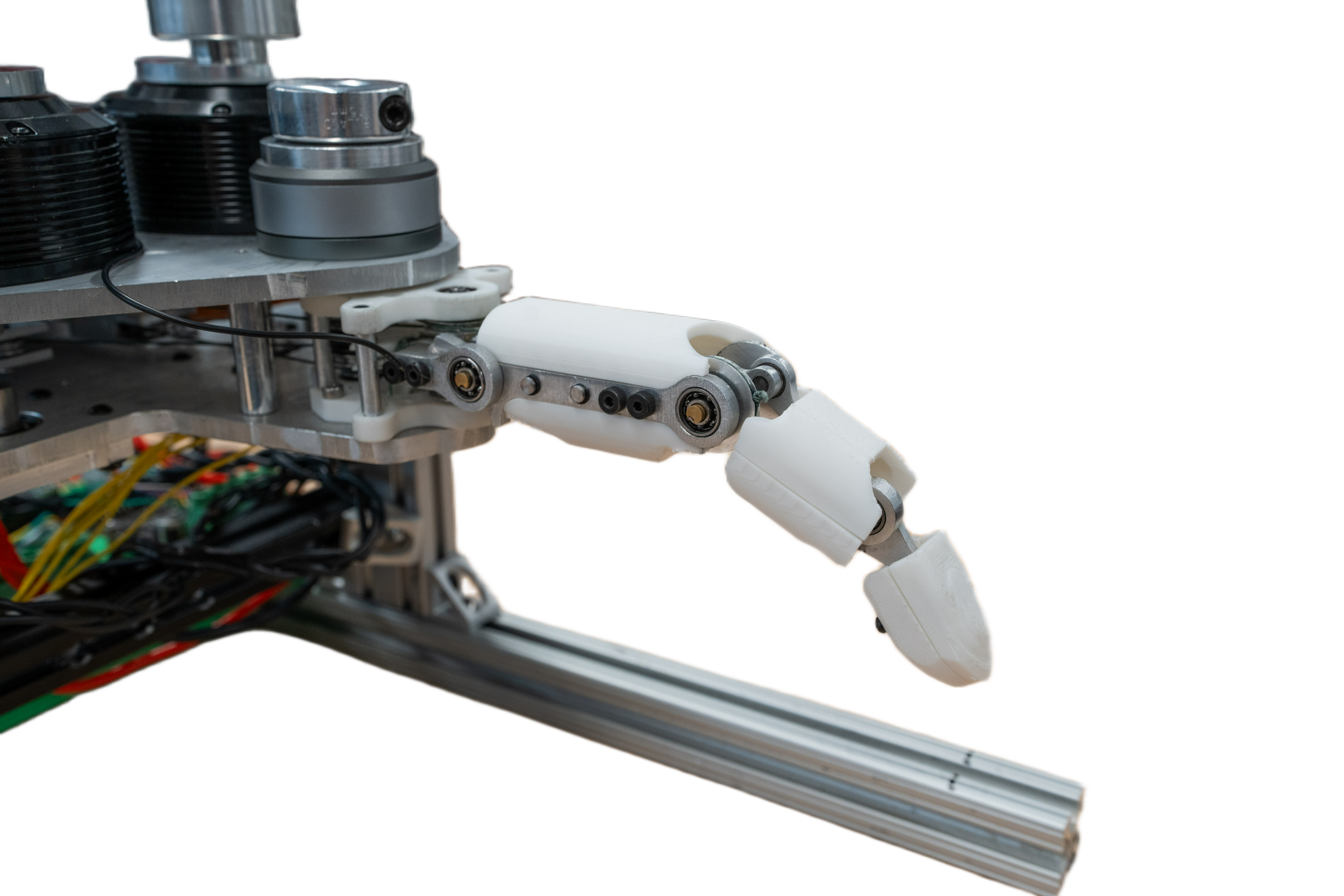
The Speedster Goal
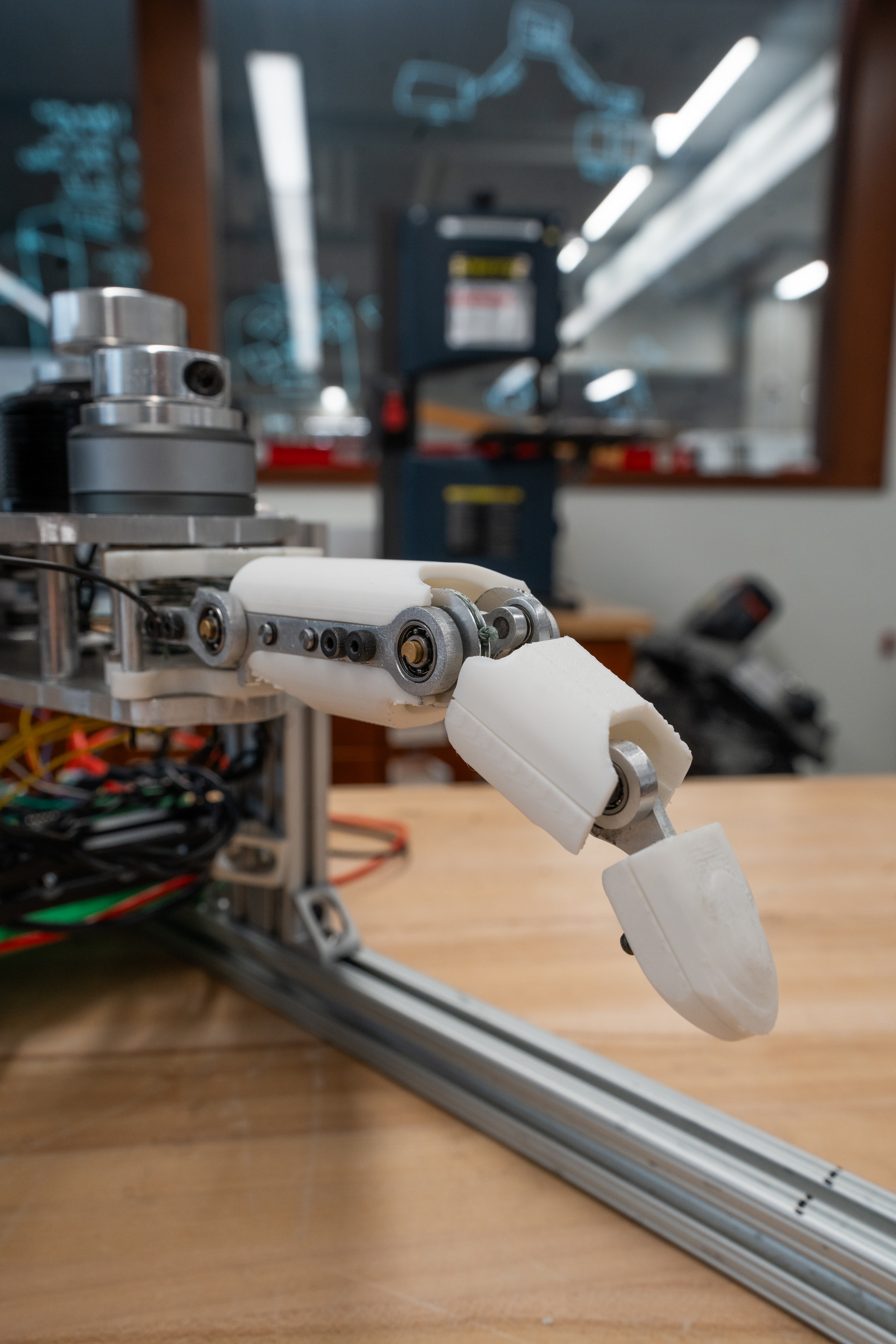
Design a robotic finger to move as fast as possible —
defined by maximum top speed and bandwidth.
This required a lightweight, mechanically transparent design.
Performance targets
Every metric met or exceeded
| Parameter | Target | Achieved |
|---|---|---|
| Continuous Fingertip Force | 20 N | ✓ 20.9 N |
| Continuous Splay Force | 5 N | ✓ 15 N |
| Joint Speed | 6.28 rad/s | ✓ 27.925 rad/s |
| Bandwidth | 10 Hz (30% ROM) 4 Hz (50% ROM) 2 Hz (70% ROM) |
✓ 12 Hz ✓ 5 Hz ✓ 5 Hz |
| Range of Motion | 90° (MCP) 90° (PIP) 90° (DIP) 20° (splay) |
90° (MCP) 90° (PIP) 90° (DIP) 60° (splay) |
| Finger Dimensions | 150 × 30 × 30 mm | ✓ 140 × 30 × 30 mm |
Whack-a-Mole Demo
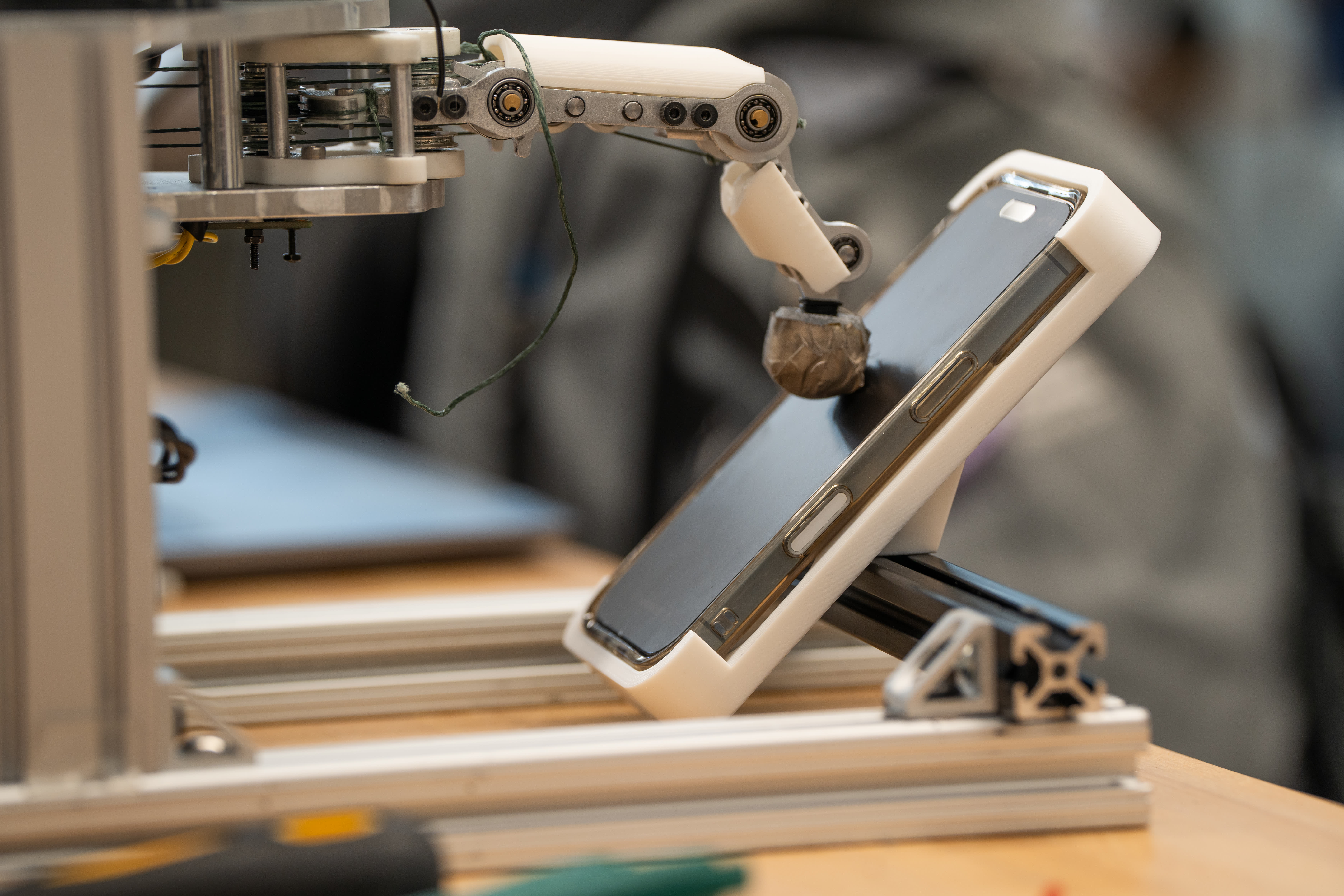
To demonstrate exceptional speed and bandwidth, we built a real-time Whack-a-Mole demo. As dots appear on a phone screen, the finger presses them with superhuman speed — average reaction time as low as 210 ms.
Powered by custom real-time inverse kinematics and motion planning in ROS 2.
Video Demos
Photo Gallery
Click any photo to expand
Our Team
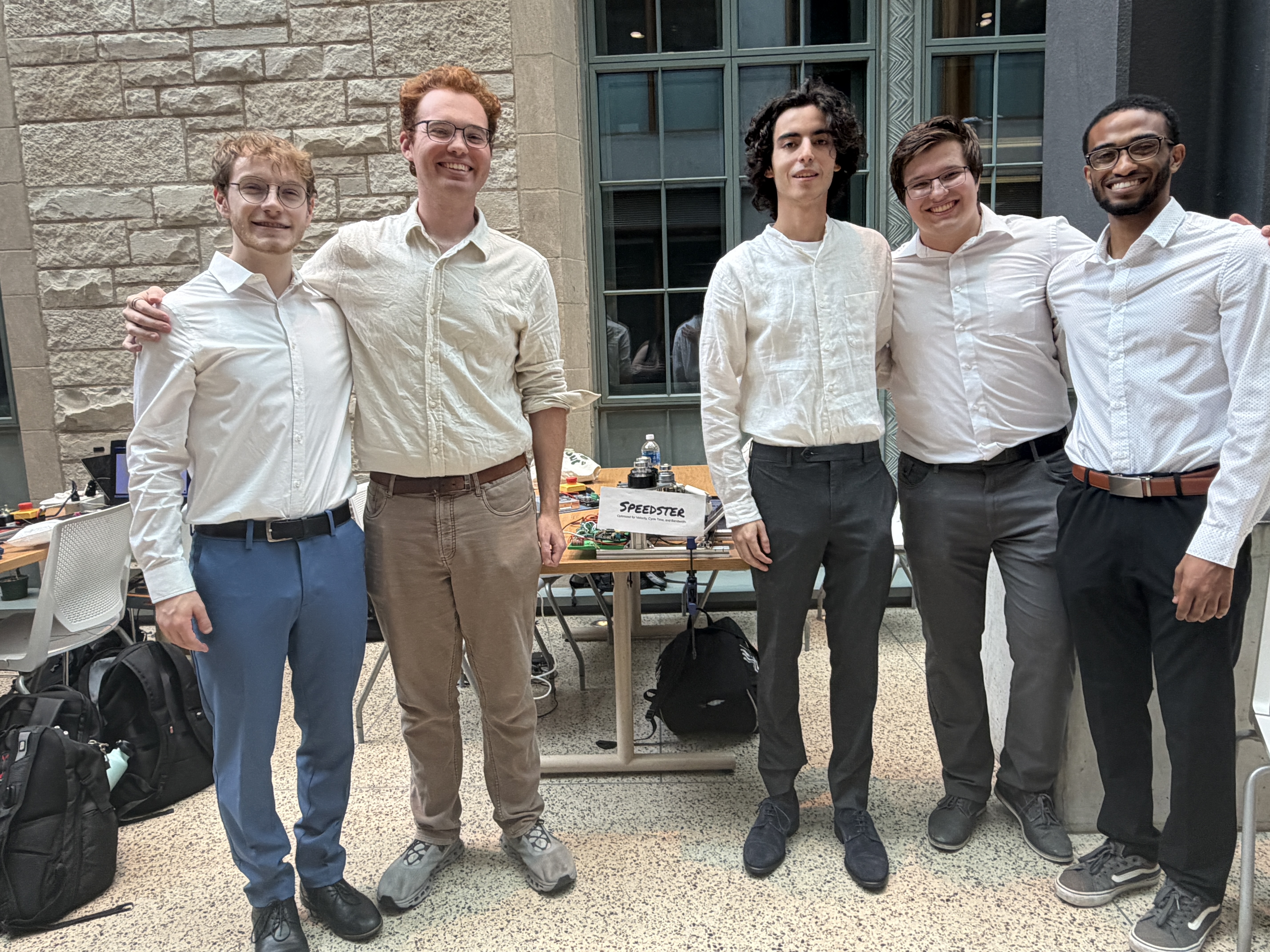
Northwestern University · RDS Course · 2026
Acknowledgements
We would like to thank the RDS Instructors — Ed Colgate, Raphael Cherney, and Sairam Umakanth — for their guidance and support throughout this project. Additionally, we thank Solomon Greenberg from ODrive for his technical support and Tony Shilati for the use of his robotic finger testbed. This work was completed as part of RDS in collaboration with the Center for Robotics and Biosystems at Northwestern University.